CFTC Staff Let Exchanges Count Bitcoin and Ether as Reserves
CFTC staff say regulated exchanges and clearinghouses can count BTC, ETH and stablecoins toward operating reserves, with haircuts. Here is what changes.
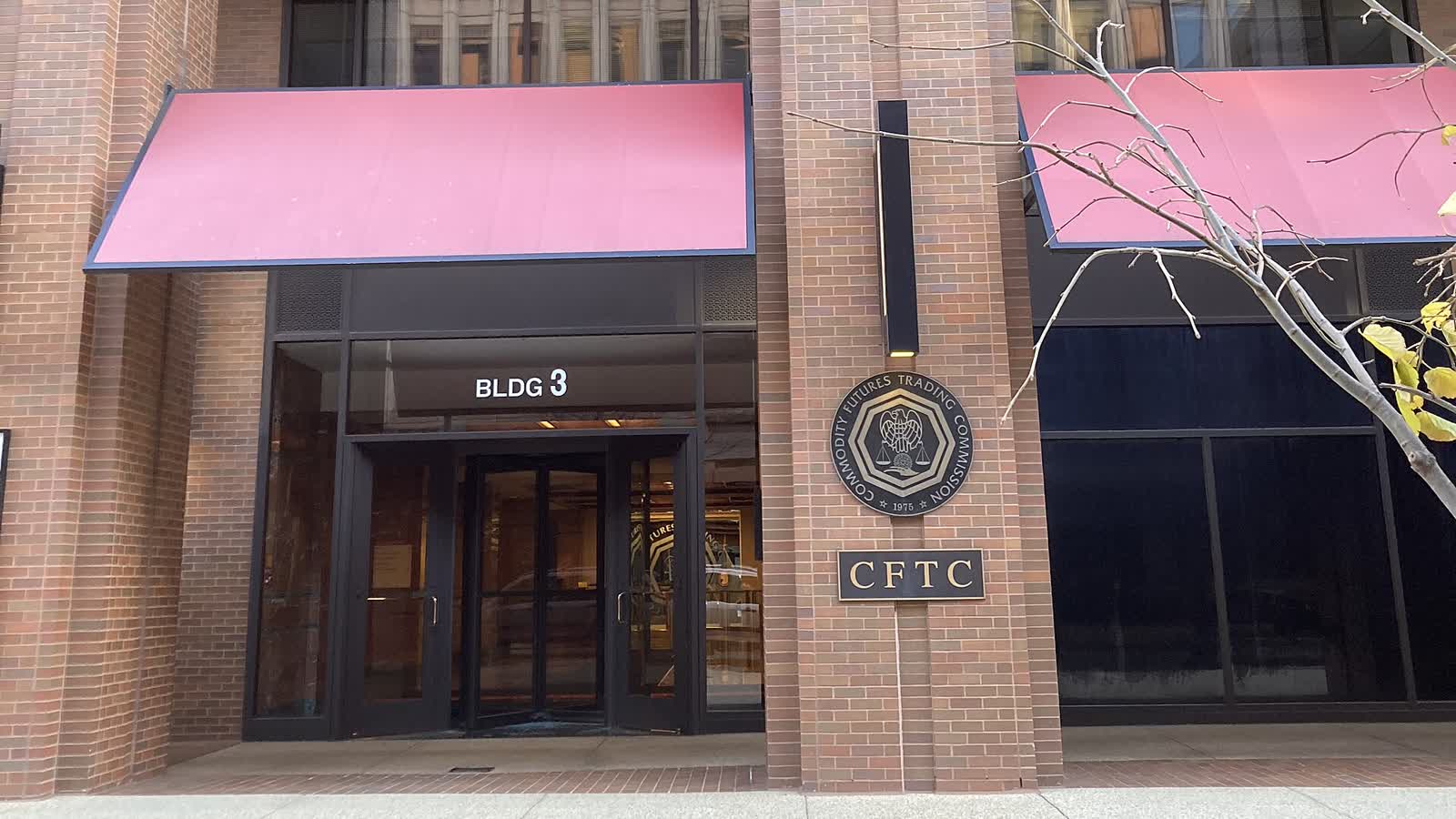
Staff at the US Commodity Futures Trading Commission have told regulated derivatives venues that they may count Bitcoin, Ether and payment stablecoins toward part of their required financial resources. Cointelegraph reported the advisory on Monday, and Decrypt published a closer read of its limits on Tuesday. The guidance is narrow, and the details decide how much it matters.
What the advisory says
CFTC rules require swap execution facilities, designated contract markets and derivatives clearing organizations to hold enough resources to cover at least 12 months of operating costs. The buffer exists so a venue can keep running, or wind down in an orderly way, if it gets into trouble.
The staff advisory explains how crypto assets can count toward that requirement. According to Cointelegraph, staff would accept a "haircut" of at least 20% for Bitcoin and Ether and 2% for qualifying payment stablecoins. A haircut discounts an asset's market value to reflect its price risk. A venue holding $10 million of Bitcoin would be able to count no more than $8 million of it.
The catch: no crypto in the liquidity test
Decrypt points to the limit that defines the policy. The 12-month buffer is separate from a liquidity requirement, and crypto does not count toward that second test. Digital assets do not qualify as "cash" or "highly liquid securities" under US accounting standards, so venues still need conventional cash-like assets on hand to pay obligations quickly.
In practice, an exchange can keep Bitcoin on its balance sheet as a long-term backstop. It cannot use Bitcoin as the money it needs available today.
Who is affected
The affected firms are the ones the CFTC supervises. Cointelegraph lists Coinbase Derivatives, Crypto.com's North American Derivatives Exchange and Bitnomial Exchange, along with prediction markets Kalshi and Polymarket US. Offshore crypto exchanges that the CFTC does not supervise are outside the advisory.
A staff view, not a rule
Both outlets stress that this is guidance from the Division of Market Oversight and the Division of Clearing and Risk. It is not a formal rule approved by the commissioners, creates no enforceable rights, and is not a no-action position. Decrypt adds that it could change as the commission's membership changes: President Trump recently sent a bipartisan slate of nominees for vacant CFTC and SEC seats.
The advisory also fits a pattern. Decrypt notes that the agency has already cleared perpetual futures on individual stocks, issued no-action relief for crypto apps offering regulated derivatives, and floated a plan to bring crypto exchanges under federal oversight.
Market context
The news lands in a weak market. CoinGecko puts bitcoin near $59,200, down about 1.8% over 24 hours, with ether near $1,650 (down 2.8%) and solana near $68 (down 4.7%). A 20% haircut looks different when an asset has been moving this much.
Stablecoins carry the smaller haircut, and the supply is large. DefiLlama shows about $284 billion in stablecoins in circulation on Nov. 25, with USDT near $174 billion and USDC near $69 billion. Payment stablecoins are the asset class with the clearest path into this kind of reserve.
What to watch
- Formal rulemaking. Staff guidance can be reversed more easily than a commission rule.
- Venue disclosures. Whether exchanges say how much of their buffer sits in crypto, and which assets.
- Commission changes. New commissioners may read the advisory differently.
How this connects to index funds
Reserve rules for exchanges do not change what a token is worth, but they show how regulators sort assets into "treated like cash" and "treated like a volatile holding." That sorting also shapes how large-cap tokens are described in index products. Harman's top fund is a demo basket of the largest tokens by market cap, and the CEX fund is a demo basket for exchange-linked tokens. Both run on a demo network today; there is no mainnet yet.
Sources
Related funds
Related posts
-
News
BlackRock Tokenized Money Market Fund Launches in Hong Kong
BlackRock's HKD Digital Liquidity Fund opens with about $100M and settles in a Hong Kong dollar stablecoin. What it adds to tokenized real-world assets.
-
News
South Korea Proposes Ending Its 2017 ICO Ban in a New Bill
South Korea's FSC has drafted a bill that would lift the nine-year ICO ban, add stablecoin limits and cap exchange ownership at 20%. What it changes.
-
Guide
Solana Index Fund: How a Solana Token Basket Works and Risks
A Solana index fund holds SOL and other Solana-based tokens in set weights. See how it is built, what it costs, its risks and how Harman's demo is set up.



Join the waitlist
Leave your email and we will write to you when Harman launches on mainnet.
You are on the list. Thank you.
That did not work. Check the address and try again.