Meme Coin Index Explained: Weights, Costs and Real Risks
A meme coin index holds several meme tokens in set weights. See how it is built, what it costs, why the risks run high and how Harman's demo meme funds work.
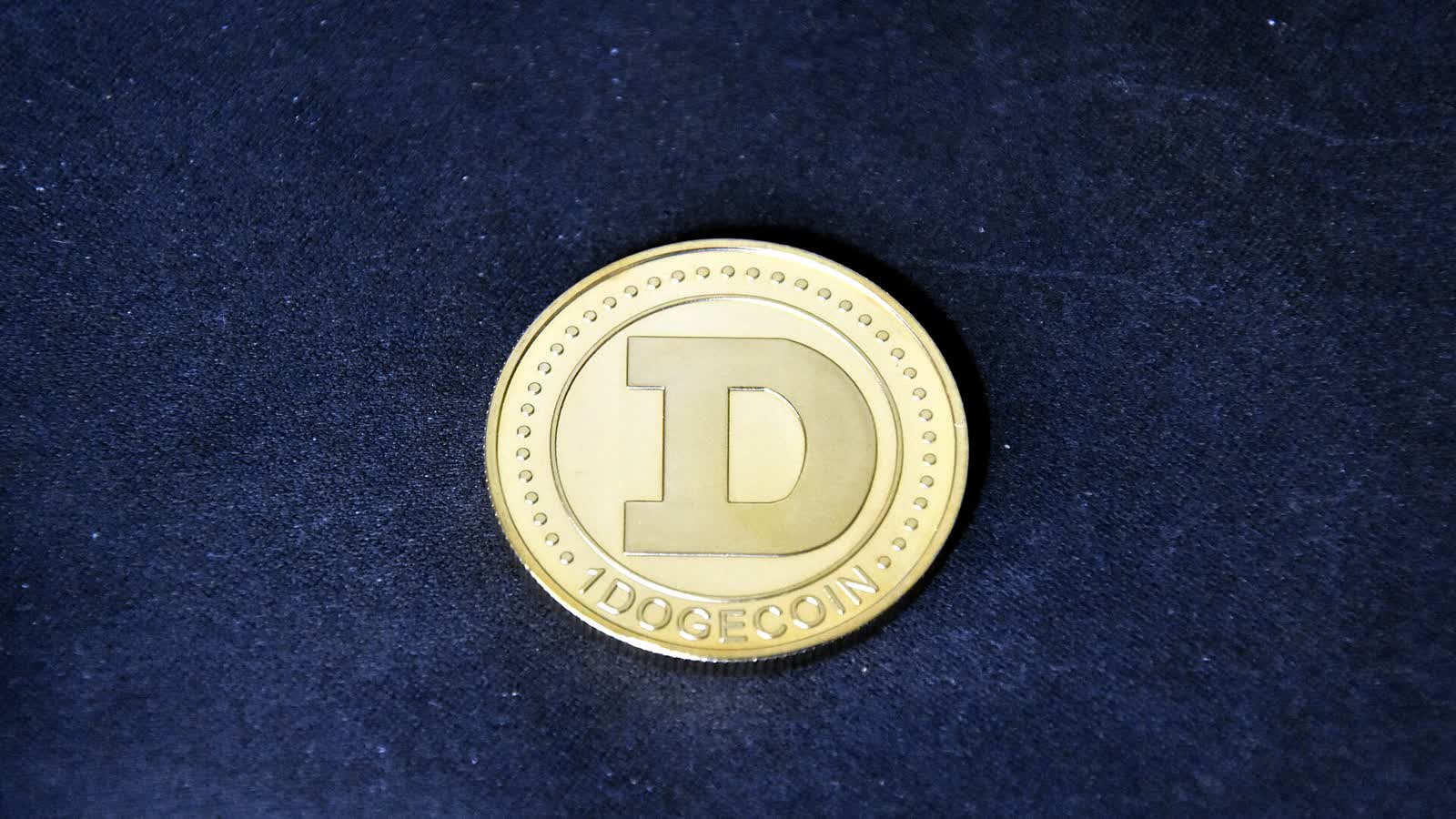
A meme coin index is a fund that holds several meme tokens in fixed proportions, so one position covers a group of coins instead of a single bet. This guide explains what such an index contains, how the weights work, what it costs and why this is among the riskiest ways to build a crypto basket. It also shows how the Harman demo meme funds are configured.
What is a meme coin index?
A meme coin is a token whose value comes mostly from community attention and a recognizable theme, often a joke, an animal or a public figure. Most have no cash flow, no fee revenue and no claim on any asset. Their price depends on how many people want to hold them next week.
An index bundles several of these tokens. You hold a share of the fund, and the fund holds the tokens. If the general idea is new to you, start with the crypto index fund guide, which covers the mechanics that apply to every basket. A meme index uses the same mechanics on a much more volatile set of assets.
The reason people build one is simple. Picking the one meme coin that will matter is close to impossible, and many of them go to zero. A basket spreads that bet across several names, so a single failure hurts less. It does not remove the underlying problem, which is that the whole category can fall together.
How large is the meme coin market?
Meme tokens are a small slice of a large market. According to CoinGecko's global data, total crypto market capitalization was near $2.06 trillion on 25 November 2026. On CoinGecko's meme token category, the largest names that day were Dogecoin at about $8.5 billion, Shiba Inu at about $2.1 billion and Pepe at about $1.5 billion in market capitalization.
Set next to the whole market, even the largest meme coin is a rounding error, and the median meme token is far smaller. Small size has a direct consequence: thin trading. A fund that holds a small token can move its price when it buys or sells, and it may not be able to exit at the quoted price in a hurry.
How far have meme coins fallen from their peaks?
The same CoinGecko category page lists each token's distance from its all-time high. On 25 November 2026 the figures were:
- Dogecoin: about 93% below its peak
- Shiba Inu: about 96% below
- Pepe: about 88% below
- Bonk: about 96% below
- Pudgy Penguins: about 94% below
- Official Trump: about 99% below
These are not the worst cases in the category. They are the large, well-known names. A drop of 90% means a holder needs a tenfold gain just to return to the old price. Past declines do not predict the next move, but they show the range of outcomes an index like this has to live with.
What goes into a meme coin index?
There is no standard list, so each provider decides. Common choices are:
- Established names that have survived more than one market cycle.
- Tokens on a single chain, so the fund shares one network's fortunes.
- Newer tokens that gained attention recently, which carry the highest risk.
A responsible index states its rules in advance: how a token qualifies, how much of the fund any one token can take and what happens when a token fails or loses its market. Without those rules, the list is just a hand-picked set of favorites.
How are meme index weights set?
The weight is the share of the fund each token represents at the start. Three methods are common:
- Equal weight. Each token gets the same share. Small, risky tokens count as much as the largest.
- Market-cap weight. Larger tokens get more. The fund leans toward the survivors, which usually means less exposure to tiny tokens.
- Fixed or capped weight. The designer picks each share by hand and sets a ceiling for the largest.
Weights also drift. Meme prices can double or halve in days, so a fund that never trades back to its targets can end up dominated by whatever rose last. For a comparison of a hand-built basket with a rules-based fund, see the crypto basket guide.
How Harman's meme funds are structured
According to the project's fund configuration, Harman has two meme funds, one per network.
The EVM fund, the Harman Meme Index, starts with five tokens: Shiba Inu (SHIB) at 30%, Pepe (PEPE) at 30%, Floki (FLOKI) at 15%, Mog (MOG) at 15% and Turbo (TURBO) at 10%. Two tokens make up 60% of the starting basket, so the fund is concentrated in them.
The Solana fund, the Harman Solana Meme Index, starts with six tokens: Bonk (BONK) at 25%, dogwifhat (WIF) at 25%, Pudgy Penguins (PENGU) at 15%, Fartcoin (FARTCOIN) at 15%, Popcat (POPCAT) at 10% and Official Trump (TRUMP) at 10%. You can see the live lists on the Meme fund page and the Solana meme fund page.
In the current demo configuration, a fund holds a fixed number of each token, so the weights drift with prices. The project documentation does not describe automatic rebalancing for these funds.
Harman is a demo project today. Its contracts run on test networks, there is no mainnet launch yet, and a security audit is planned with Verok but not finished. The weights above describe how the demo is set up, not a live product.
What does a meme coin index cost?
There are three kinds of cost.
Fund fees. Index funds charge for running the basket. The Harman demo configuration lists a 1% yearly streaming fee, a 0.10% fee when you mint fund shares and a 0.20% fee when you redeem them. These numbers apply to the demo funds only. Always read the fee table of any product you look at.
Trading costs. Meme tokens often have wide spreads and shallow order books. Buying and selling the underlying tokens can cost much more than the headline fee suggests, and the cost grows when the market is stressed.
Network fees. Each on-chain transaction pays a fee to the network. On a busy chain this can be a visible share of a small position.
What are the risks of a meme coin index?
The risks stack on top of the normal crypto risks, so they deserve a longer look.
Extreme volatility. Daily moves of 5% to 10% are routine for meme tokens. On 25 November 2026, the large names in the CoinGecko category were down between about 2% and 8% in 24 hours, and that was an ordinary day.
Correlation. Meme tokens tend to rise and fall together, driven by the same sentiment. Holding ten of them is less diversified than it looks.
Concentrated ownership. Many meme tokens have a few large holders. One wallet selling can move the price sharply.
Liquidity. In a sell-off, buyers disappear. A token that was easy to buy can be hard to sell near the quoted price.
Scams and rug pulls. Some tokens are built to attract buyers and then drain them. An index with weak entry rules can include one.
Smart contract risk. A fund adds its own contracts on top of the token contracts. A bug in either can cost money. An independent audit lowers this risk but does not remove it.
Regulatory risk. Rules for crypto assets differ by country and change often, and some tokens may be treated as securities or restricted in some places.
If you want a view of how a larger, more mixed basket handles risk, the Top fund is a useful contrast.
Meme coin index vs holding one meme coin
Holding a single token gives a clear, simple position. If it works, the gain is large, and if it fails, the loss is total. An index trades some of the upside for protection against a single failure.
That protection is real but limited. If the category as a whole loses attention, a basket of ten tokens falls almost as hard as one. What the index does reduce is the risk of picking the wrong single name. It does not reduce the risk of being in memes at all.
There is also a practical difference. Managing ten tokens by hand means ten purchases, ten sets of fees and constant monitoring. A fund does that in one transaction, at the price of its own fees and contract risk.
How to evaluate a meme coin index
Before you consider any product like this, check these points:
- Written rules. Does the fund say how tokens are chosen and removed?
- Weights and caps. Is any single token allowed to dominate?
- Liquidity. Can the fund actually trade the underlying tokens at its size?
- Fees. What is the all-in cost, including trading and network fees?
- Audit status. Has an independent firm reviewed the contracts, and can you read the report?
- Your own limit. Decide in advance how much you can lose without it changing your life.
The last point matters most for this category. A position you can afford to lose entirely is a different thing from one you are counting on.
Frequently asked questions
What is a meme coin index?
It is a fund that holds several meme tokens in set proportions, so a single position covers a group of coins. It follows token prices, which depend mostly on attention and sentiment.
Is a meme coin index safer than one meme coin?
It lowers the risk that one token fails, but it does not make the category safe. Meme tokens tend to move together, and large drops are common even among the biggest names.
Does a meme index pay any income?
Not by itself. Meme tokens usually have no cash flow or fee revenue. Any return comes from price changes, and prices can go down as easily as up.
How many tokens should a meme index hold?
There is no required number. Five to ten is common. Fewer tokens means one failure matters more, and more tokens means each position is small and may be hard to trade.
Do the tokens in a meme fund need to be rebalanced?
Over time the winners outgrow their target share. A fund can trade back to its weights on a schedule or when drift passes a limit. Whether it does so should be stated in its rules.
Is this financial advice?
No. This guide explains how meme coin indexes work. It does not recommend any token, fund or allocation.
Where can I see how Harman builds its meme funds?
Open the Meme fund or the Solana meme fund. Both are demo funds on test networks.
Sources
Related funds
Related posts
-
Guide
Solana Index Fund: How a Solana Token Basket Works and Risks
A Solana index fund holds SOL and other Solana-based tokens in set weights. See how it is built, what it costs, its risks and how Harman's demo is set up.
-
Guide
Crypto Basket: How to Build One and What It Really Costs
A crypto basket is a hand-picked group of tokens held together. See how it differs from an index fund, how to build one, and what to watch for before you do.
-
Guide
Crypto Index Fund Explained: Weights, Fees and Rebalancing
A crypto index fund holds a basket of tokens in set weights so one share tracks a market segment. Learn how weights, fees and rebalancing work, and the risks.

Join the waitlist
Leave your email and we will write to you when Harman launches on mainnet.
You are on the list. Thank you.
That did not work. Check the address and try again.